
Faustine & Mestrich: In Matrilineal Rememberance
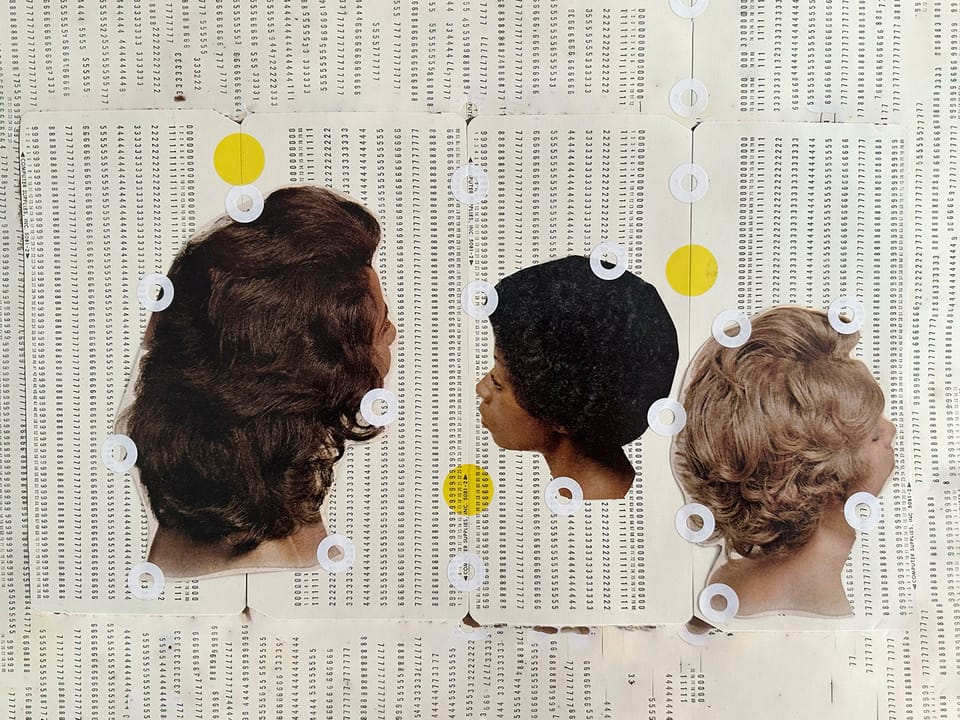
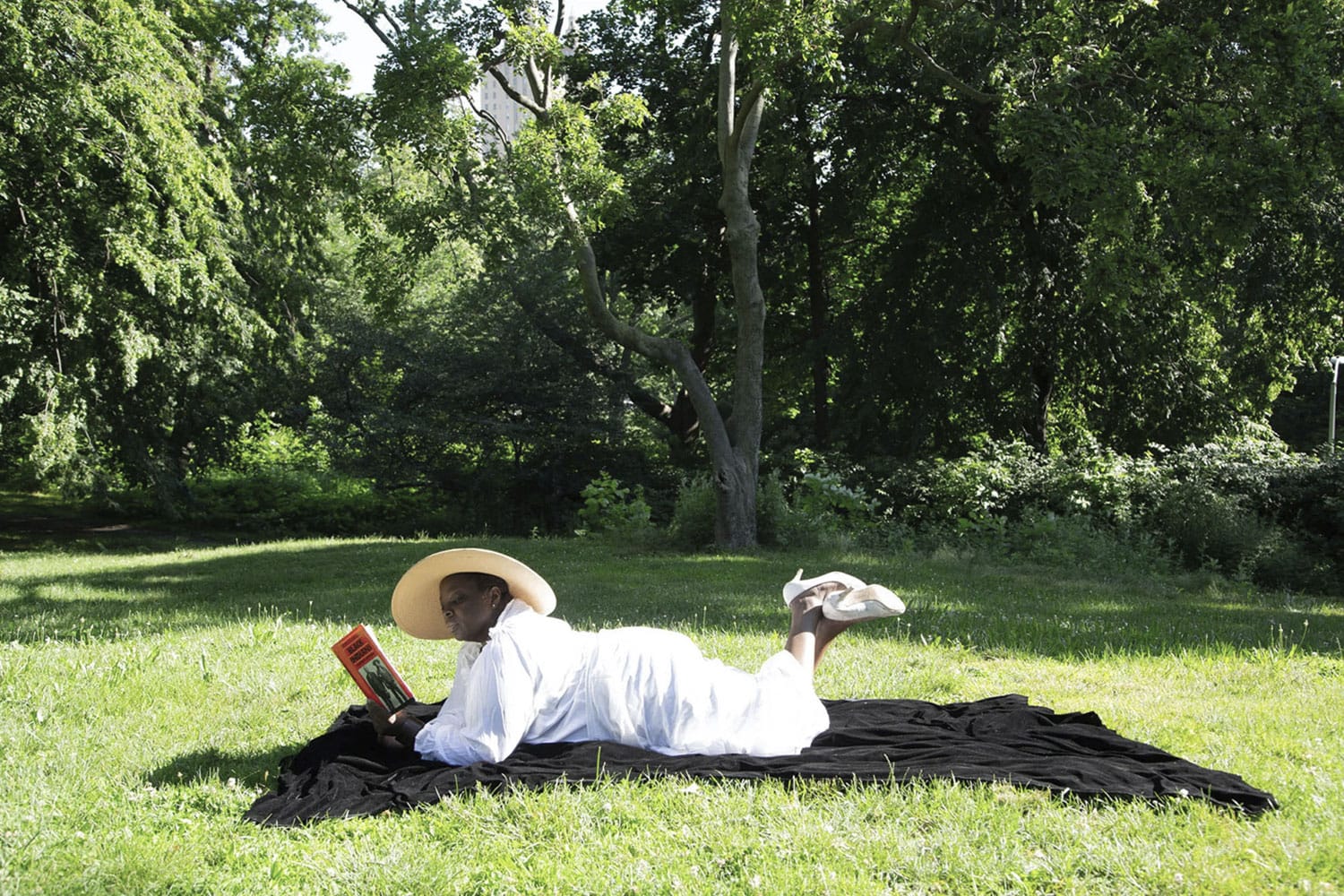
"As counter-memory and counter-monument, Faustine and Mestrich’s works affirm how women of color have been significant drivers of American economic growth from 1627 (the earliest site in White Shoes) through the post-civil rights movement of Mestrich’s installation. They have confronted and changed an erasive canon of representational dominance and achieved this individually and in community, through a shared refusal to let their histories disappear." — Patricia Silva for CultBytes.
Nona Faustine and Qiana Mestrich each have a distinct solo exhibition at CPW Kingston until May 10, 2026. It's the first time the two artists and friends have shown together since The Photographic Self, a group exhibition juried by Carla Williams at Woman Made Gallery in Chicago in 2013.
Writing a review of their exhibitions is the second time I've written through grief about a Black female artist who passed too soon after complications from cancer. Wanda Ewing passed in 2013 as I finished graduate school alongside Nona and Qiana. We entered a different imaging world in 2013: the iPhone 5 and Samsung Galaxy S4 made mobile photography a pervasive part of living in the West and "Selfie" was the Oxford Dictionaries' Word of the Year. Algorithmic imaging was displacing the lens socially and economically; truth and neutrality in photographic information were entering additional cycles of reappraisal. In the Spring 2012 issue of Bitch Magazine Dr. Safiya Umoja Noble addressed the lack of neutrality in technology with the essay "Missed Connections: What Search Engines Say about Women." After our graduation among some pines in Anandale, Mestrich kept us connected through the Dodge & Burn Critique Group, a digital project for which there is now an academic book. I'm so grateful to have them both in my life, and seeing their solo exhibitions side by side is one of the most rewarding experiences I've had as an art viewer.
For Faustine's What My Mother Gave Me, curator Marina Chao focused on “...the intersection of the political and matrilineal in Nona's work…Seeing a project as epic and historically important as White Shoes through the prism of [a] very intimate series like Young Mothers and Mitochondria feels both newly revealing and very natural.” Caring for her daughter’s sense of belonging in the world was a central concern and through photography Faustine conveyed that a history of resistance is also part of her daughter's inheritance. Mestrich's work complements What My Mother Gave Me by emphasizing the transmission of professional agency from mother to daughter.
Faustine's White Shoes has been shown as a series before, most notably at the Brooklyn Museum in 2024 in its entirety, but CPW did something unique with Faustine's work. Chao linked her undergraduate portfolio, Young Mothers, with her Master's Degree final project, White Shoes, showing thematic integrity and visual geneology. Although rare, it is not unusual for institutions to show undergraduate work posthumously—a good 80% of Francesca Woodman's work that circulates among institutions and collectors is undergraduate work. But Faustine earned her own prominence on her own terms while alive.
"I love that series," said Faustine's sister Channon Simmons. "It’s proof of how talented Nona was even in undergrad. She loved black and white documentary photography. It was the style she felt the most confident shooting and because of it the work shines. Nona had wanted to exhibit this series for years." Working with seven mothers in Flatbush, all in their early 20s like her, Faustine documented intimate moments of quotidien motherhood that pay homage to “The Greats” she admired: Gordon Parks, Sally Mann, Roy De Carava, Carrie Mae Weems. Some of the sitters in Young Mothers like Renee are Channon’s friends even today, showing how connected the sisters have been through photography.
Mestrich's Do Not Fold, Spindle or Mutilate includes sculpture, collage, an installation, and Mestrich's first published photo book. “I feel very fortunate to have known both Nona and Qiana for many years…that, of course, also informed the way I approached the shows,” said Chao. The selections reflect Chao’s attentiveness to, and knowledge of, their shared sensibilities. But unless you were a part of their lives, you walk away from their solo shows not knowing about their deep friendship and mutual exchanges: Mestrich effectively launched Faustine's career by publishing the first professional interview of Faustine for Mestrich's Dodge and Burn in 2014.
Do Not Fold, Spindle or Mutilate is a speculative archive centering the indispensability of American women of color in the workplace. To many, Sheryl Sandberg may be the face of successful women entrepreneurs in the US, but Sandberg isn't even in the top 10. Thai Lee of SHI International is the highest earning woman of color in the top 5, one of seven women of color in the top 15 most successful American entrepreneurs who happen to be women. Oprah is number 13 on that list, Sandberg is 17. Mestrich's work focuses on the invisibilized corporate labor classes that women of color have navigated and negotiated as professionals. The kind of efficient and well-groomed specialists who report to higher earners but aren't given credit for their contributions. According to the Bureau of Labor statistics for 2025, women of color comprise over 70% of the managerial and professional and managerial labor force. My review details why, but it's no surprise.
Mestrich's interview with her mother for the book is insightful and revealing: a 1960s office comes to life with vivid memories of an era before High Tech became a mainstream disruptive element ruled by tech bros. It's worth contextualizing that women have held highly technical positions in technology up until that technology crosses a mainstream threshold and its commodification (by historically moneyed barons) supersedes the technical labor and specialists necessary to, basically, launch that technology into existence. Or, they are just plainly written out. Mestrich's collages juxtapose this absence of actual representation with images from magazines that point to the societal pressures of self-presentation as a working woman of color. The tension between what we see and what we don't see is activated between each of the works on display.
Economist Valerie Harris at The Economic Policy Institute recently published that Black women’s employment in 2025 had “one of the sharpest one-year declines in the last 25 years.” The 2020 Pandemic recession compounded that dip: a Biden-Harris Administration report stated that “Women of color experienced the most significant employment impacts across nearly all groups during the pandemic,” and itemized significant numbers for working women of color’s wage losses (Hispanic -$53.3 billion; Black women: -$42.7 billion; disabled women had higher unemployment rates).
What has been valuable to me about Faustine and Mestrich's works is how they have always engaged deeply with current issues in real time, and placed their work firmly and smartly as a counter history to inaccurate impositions. When Civil War memorials were booming, Faustine said in a 2017 interview with me for Flare Arts that “Monuments and icons are symbols which we judge societies by, they speak for the culture that produces them…Those symbols are only half truths, they can’t possibly tell the whole story, but we invest an awful lot in them.” This investment in reassessing the function of public signifiers—stone monuments, mass media images, gendered presentations—is one of many overlapping layers in the respective practices of Faustine and Mestrich.
The artists ended up showing together semi-coincidentally, according to Chao: "This was actually a really lovely coincidence because [Mestrich] was the winner of CPW's Saltzman Prize, which is awarded to one emerging photographer every year...this is what happens when a place like CPW is built out of community and a shared love of photography. But it couldn't have been a better combination, that's for sure." I agree!
"As I was making this work, Nona told me how much she enjoyed what I was doing and would tell me about her own mother’s experience as a working woman in NYC. I miss my dear friend, comrade in art and think almost every day. It’s incredible to see her Young Mothers series in person for the first time as part of this exhibition." — Qiana Mestrich
Read my full review of the two photography shows by Nona Faustine and Qiana Mestrich at CPW over at CultBytes.